
After a coating, adhesive, or ink is applied to a web, it typically has to be transformed from a wet, liquid state into its final, functional form. Depending on the formulation, that transformation happens through drying (removing a solvent or water) or curing (chemically converting the formulation into a solid), and the method chosen has a major impact on line speed, energy cost, and the final quality of the product.
The Basics
- Drying
- The removal of a liquid carrier — typically water or a solvent — from a wet coating through evaporation. What's left behind is the solid content of the formulation.
- Curing
- A chemical process, rather than simple evaporation, where the applied formulation reacts and converts into its final solid form — triggered by heat, ultraviolet (UV) light, or electron beam (EB) radiation, depending on the chemistry.
- Formulation types
- Solvent-based and water-based coatings both require evaporating a liquid carrier and typically need more energy and processing length to fully dry. 100% solids formulations (common with UV- and EB-curable systems) contain no carrier to remove — the entire applied material becomes part of the final coating once cured.
- Web support in the dryer
- As the web travels through a drying or curing zone, it must be supported without damaging the wet, uncured coating. Common approaches include floating the web on cushions of air (air flotation) or supporting it on rollers only in uncoated areas.
Common Drying & Curing Methods
Convection (Hot Air) Drying
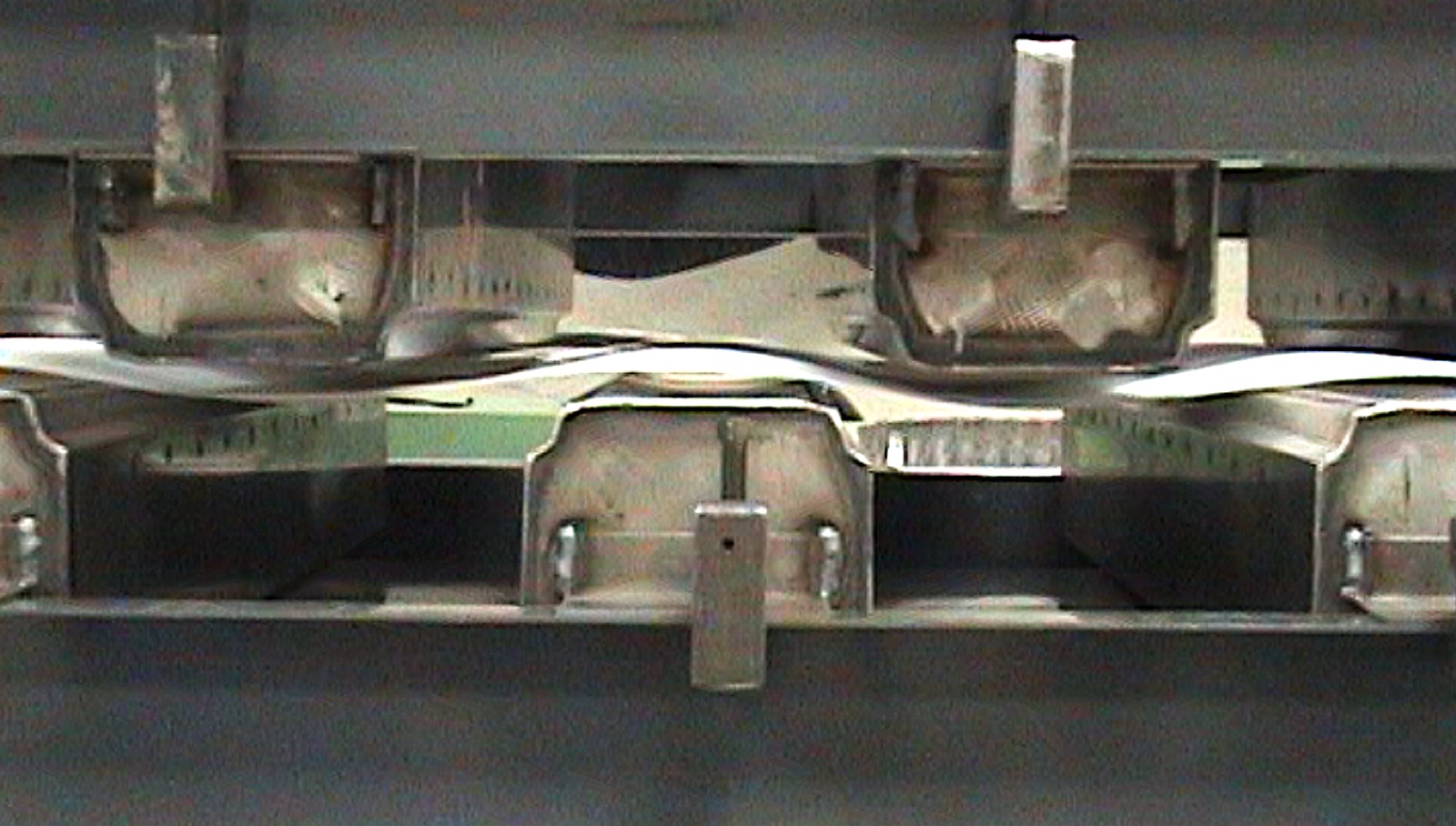
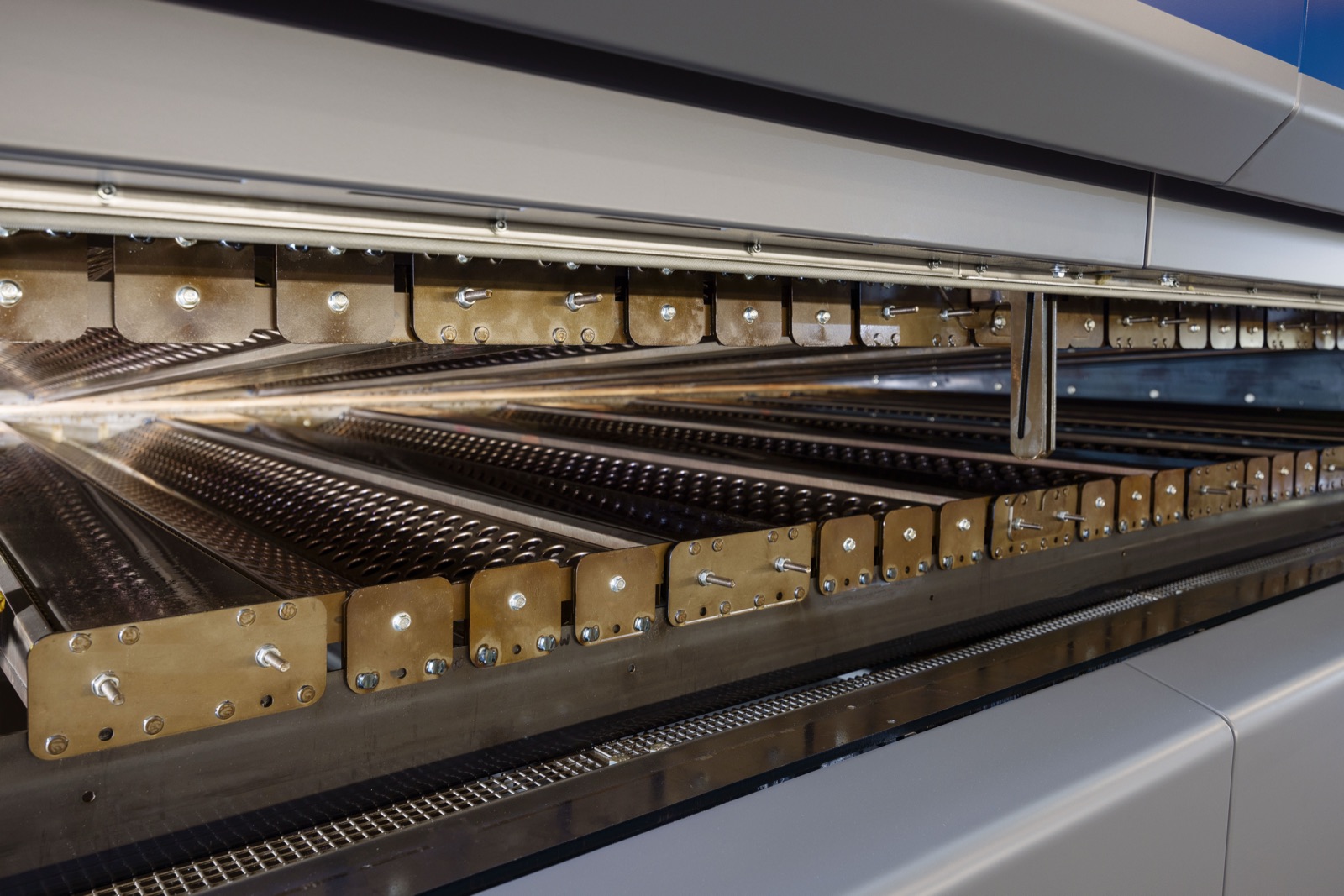
Heated air is circulated through the drying chamber and directed at the web — typically through a series of nozzles — to evaporate the liquid carrier. Ovens are often divided into multiple zones, with temperature and airflow tuned differently at each stage to control the drying rate without causing defects.
Why use it
Versatility. Convection drying works across a wide range of coating weights and formulations, and is a well-established, widely understood technology.
Common uses
General-purpose drying for solvent-based and water-based coatings, adhesives, and inks across packaging, labels, paper, and film converting.
Infrared (IR) Drying
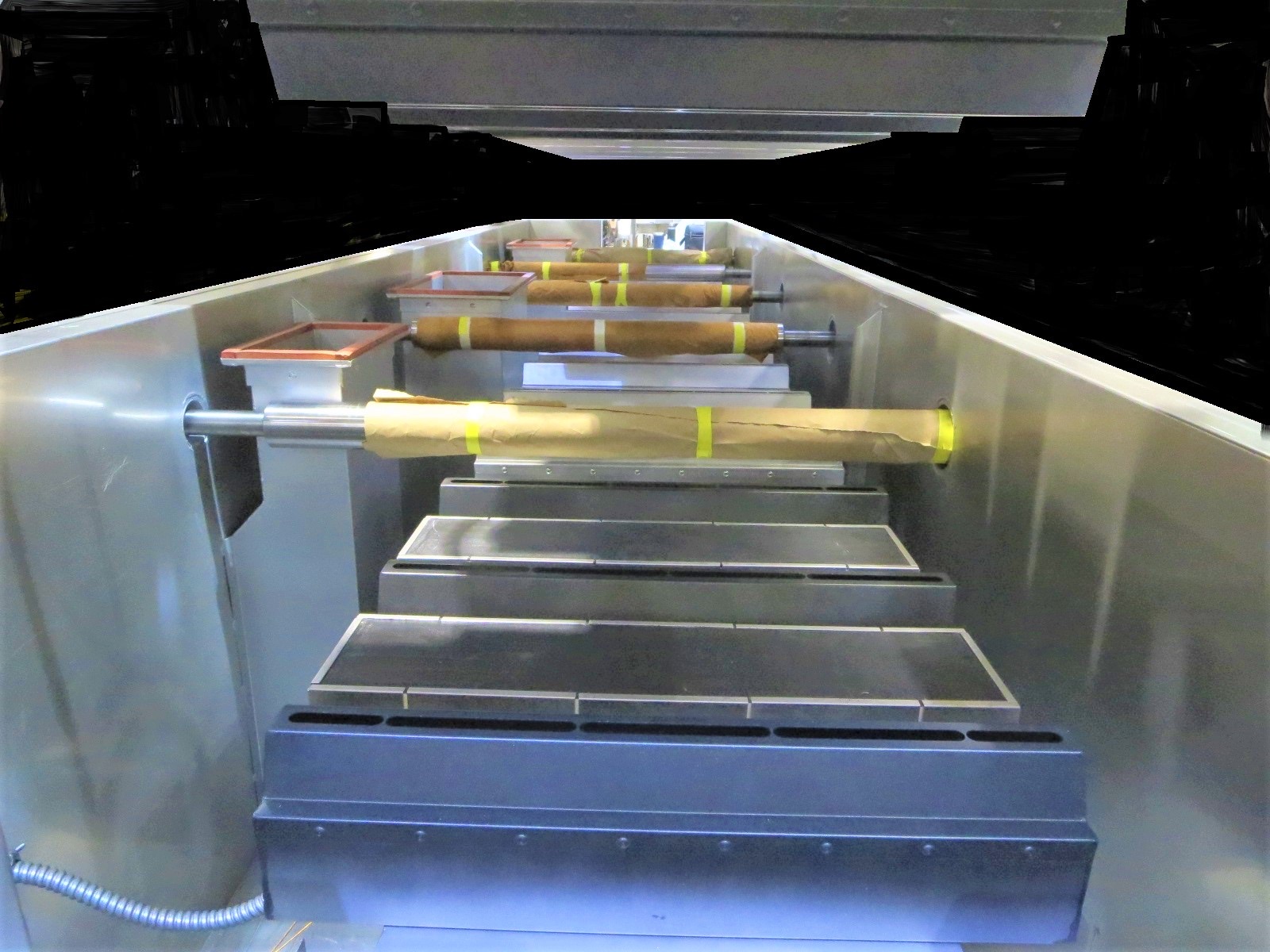
Infrared emitters direct radiant heat energy at the coated web, heating the coating (and often the substrate beneath it) directly, rather than heating the surrounding air first. IR is often used in combination with convection drying rather than as a sole drying method.
Why use it
Fast, direct heat transfer — especially useful early in a drying process to quickly begin evaporation before finishing with convection airflow.
Common uses
A common supplement to convection ovens; a component of many combination drying systems for coatings, inks, and adhesives.
UV Curing
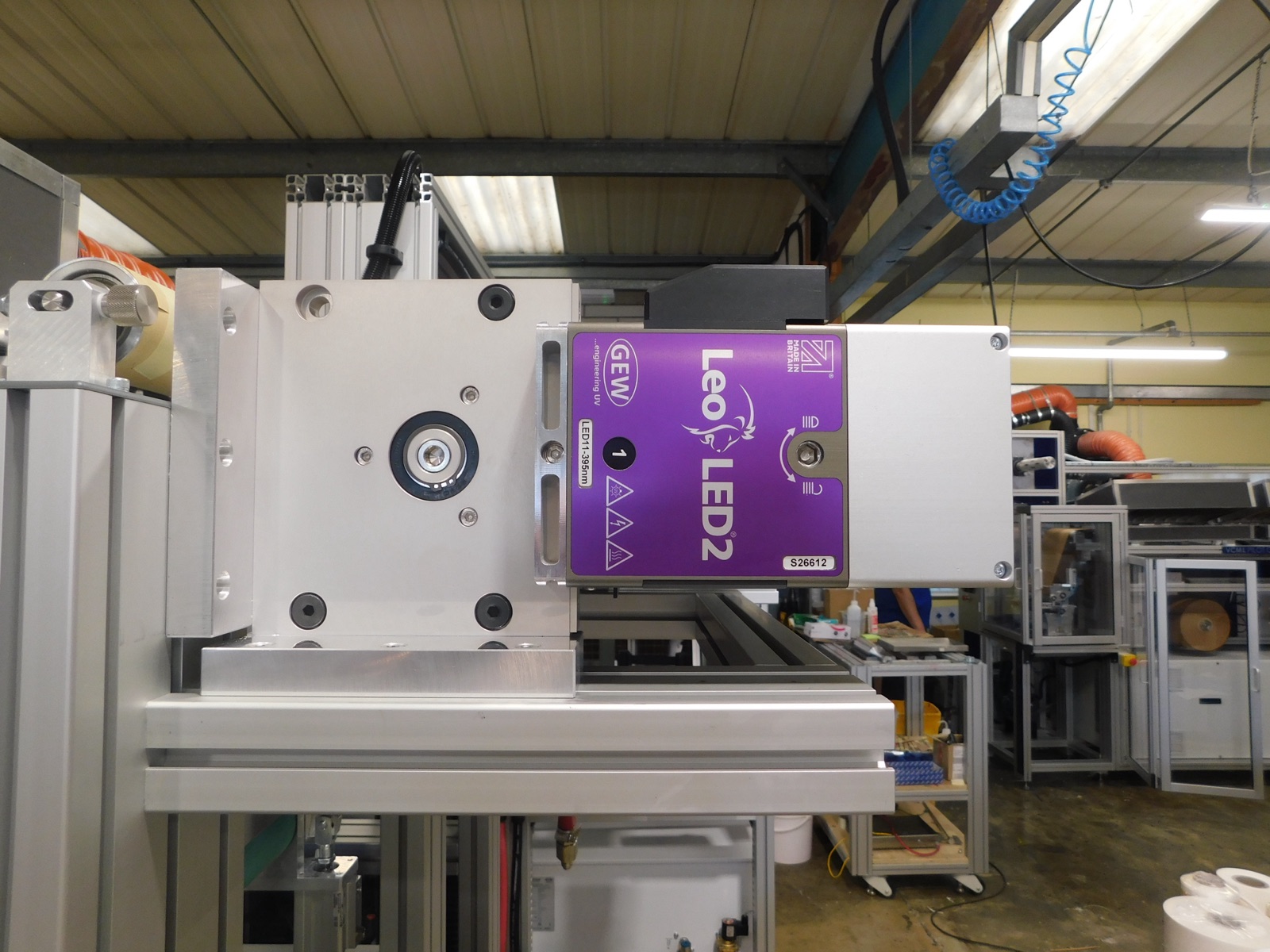
Ultraviolet light triggers a near-instantaneous chemical reaction (polymerization) in specially formulated inks, coatings, or adhesives, converting them from a liquid to a solid without evaporation. Because there's no liquid carrier to remove, curing happens in a fraction of the time required for conventional drying.
Why use it
Speed and a compact footprint. UV stations are far shorter than conventional drying ovens, curing happens almost instantly, and the process runs at low temperatures — well suited to heat-sensitive substrates.
Common uses
Printing inks, protective coatings, and adhesives — especially in labels, packaging, and other applications where line speed and substrate heat sensitivity matter.
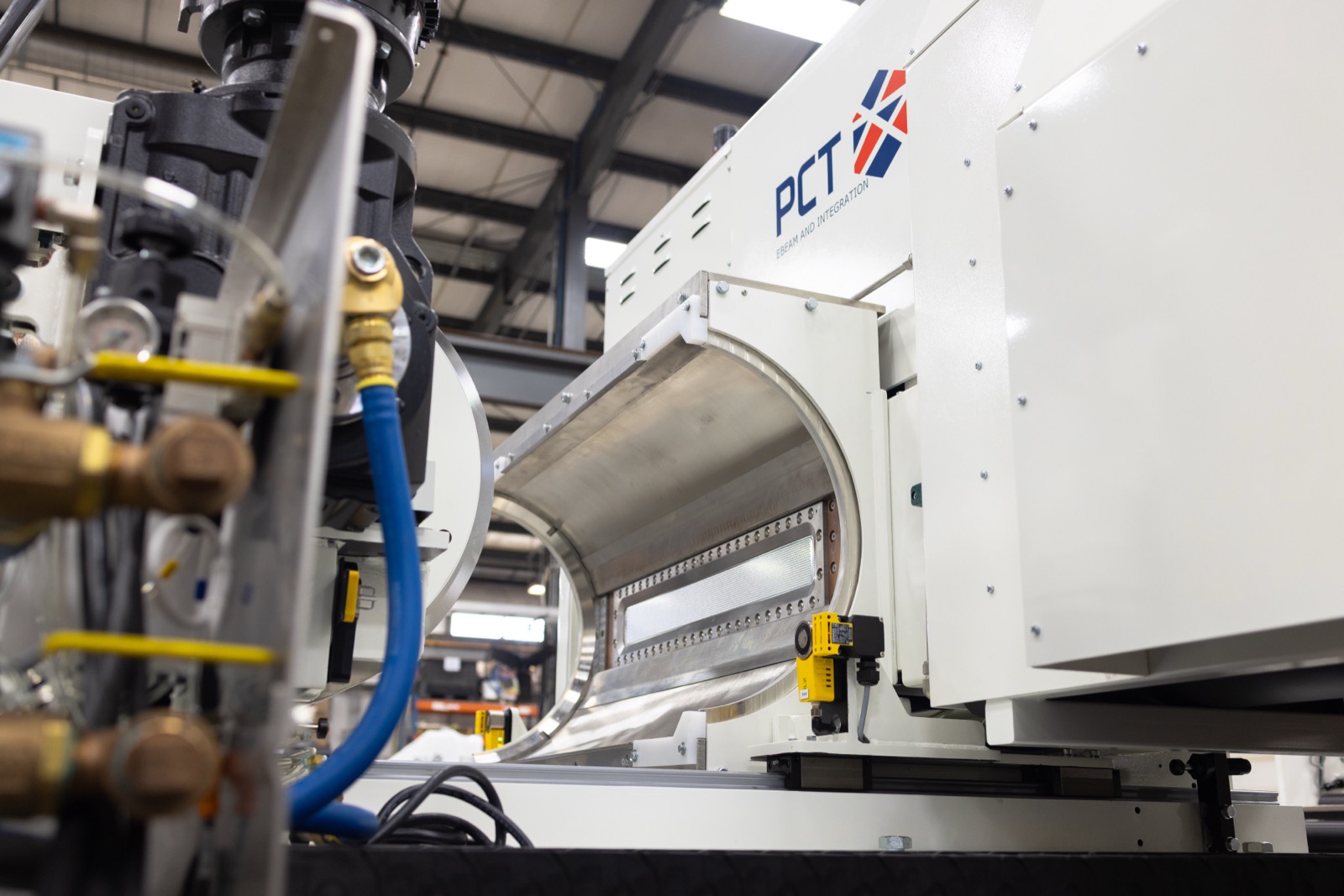
Electron Beam (EB) Curing
Similar in concept to UV curing, but the curing reaction is triggered by a beam of accelerated electrons rather than UV light. EB curing doesn't require the photoinitiators that UV-curable formulations rely on to start the reaction.
Why use it
Very fast curing with deep, uniform cure through thicker or pigmented coatings that UV light may not fully penetrate, and formulations without photoinitiators.
Common uses
Coatings and inks where a deep, thorough cure is required — including packaging, industrial, and specialty coating applications.
Conduction (Contact) Drying
The web is drawn over the surface of one or more heated rollers or drums, transferring heat directly into the substrate and coating through direct contact. Because conduction generally moves heat more effectively than heating the surrounding air, this method offers efficient energy transfer.
Why use it
Efficient, direct heat transfer — conduction moves heat more effectively than heating surrounding air.
Common uses
Paper and other substrates that can tolerate direct roller contact with a wet or drying coating, often used in combination with other drying methods.
Heated drum / conduction drying cylinder
Choosing a Method
The right drying or curing approach depends on a handful of practical factors. Use the table below as a starting point — final method selection involves additional variables specific to your formulation chemistry, substrate, and line configuration.
| Method | Formulation Type | Line Speed | Heat Sensitivity | Footprint |
|---|---|---|---|---|
| Convection (Hot Air) | Solvent / Water-based | Moderate | Low tolerance | Large |
| Infrared (IR) | Solvent / Water-based | Moderate–High | Moderate | Medium |
| UV Curing | 100% Solids (UV) | High | High tolerance | Compact |
| EB Curing | 100% Solids (EB) | High | High tolerance | Medium |
| Conduction | Solvent / Water-based | Moderate | Low tolerance | Medium |
Drying and curing also involve significant considerations around energy efficiency, solvent recovery and emissions control, oven zoning and airflow design, and safety systems — especially for solvent-based drying and EB curing. For practical guidance on line speeds, safety requirements, or energy comparisons, ARC's coating and drying SMEs and technical library are the right next step.