
Winding and unwinding are the bookends of nearly every converting line — where a roll enters the machine and where the finished material leaves it. The right configuration for each end depends on substrate sensitivity, roll size, line speed, and how much changeover downtime is acceptable.
Unwind Types
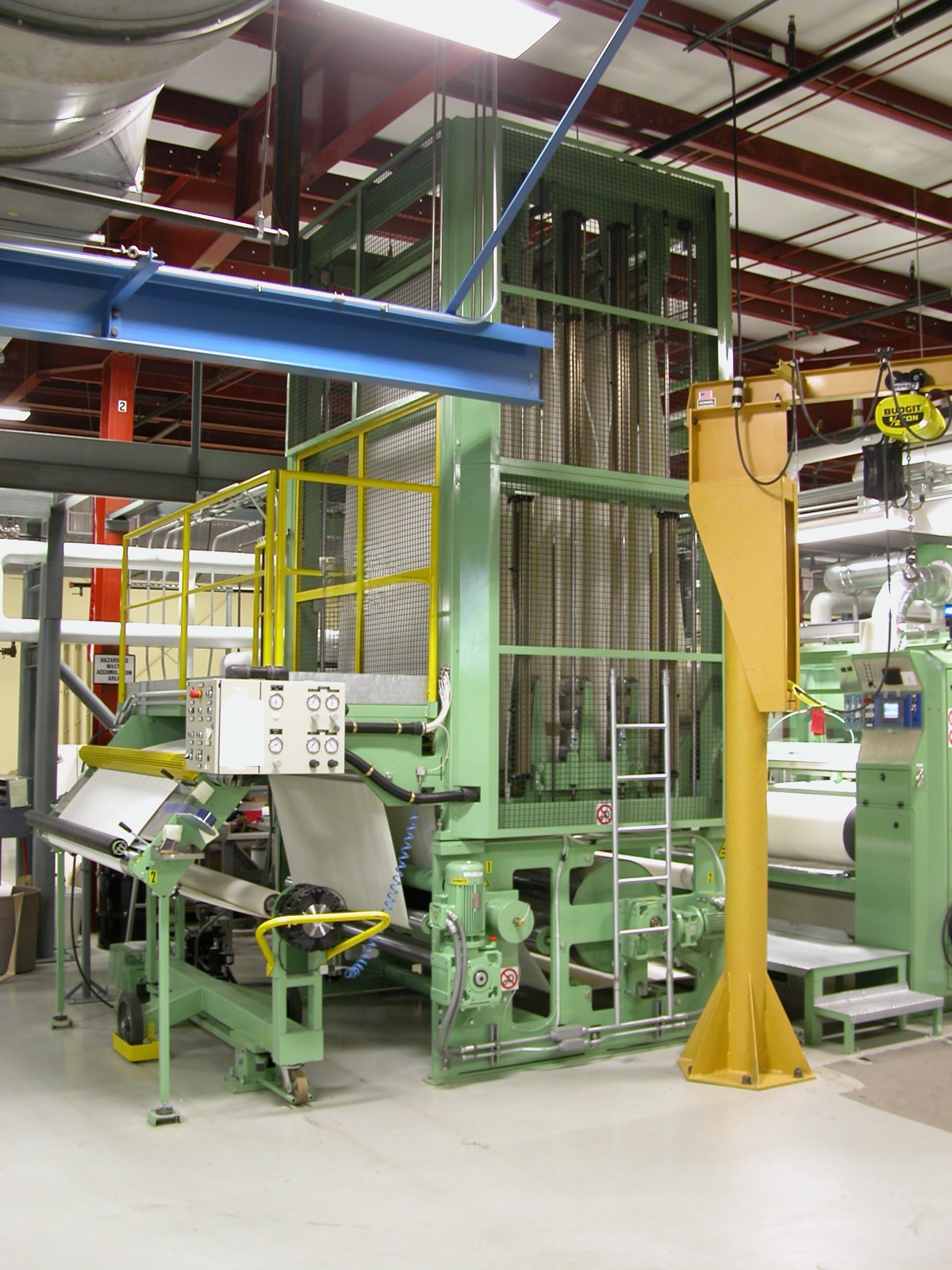
Shaft-Mounted Unwind
The incoming roll is mounted on a shaft that passes through its core, held in bearing stands on either side. Tension is managed via a brake or driven motor. Simple and cost-effective for most standard operations.
Why use it
Simplicity and lower cost — easier to maintain and operate than more complex configurations.
Common uses
Standard operations where roll weights are manageable and changeover speed is not the primary constraint.
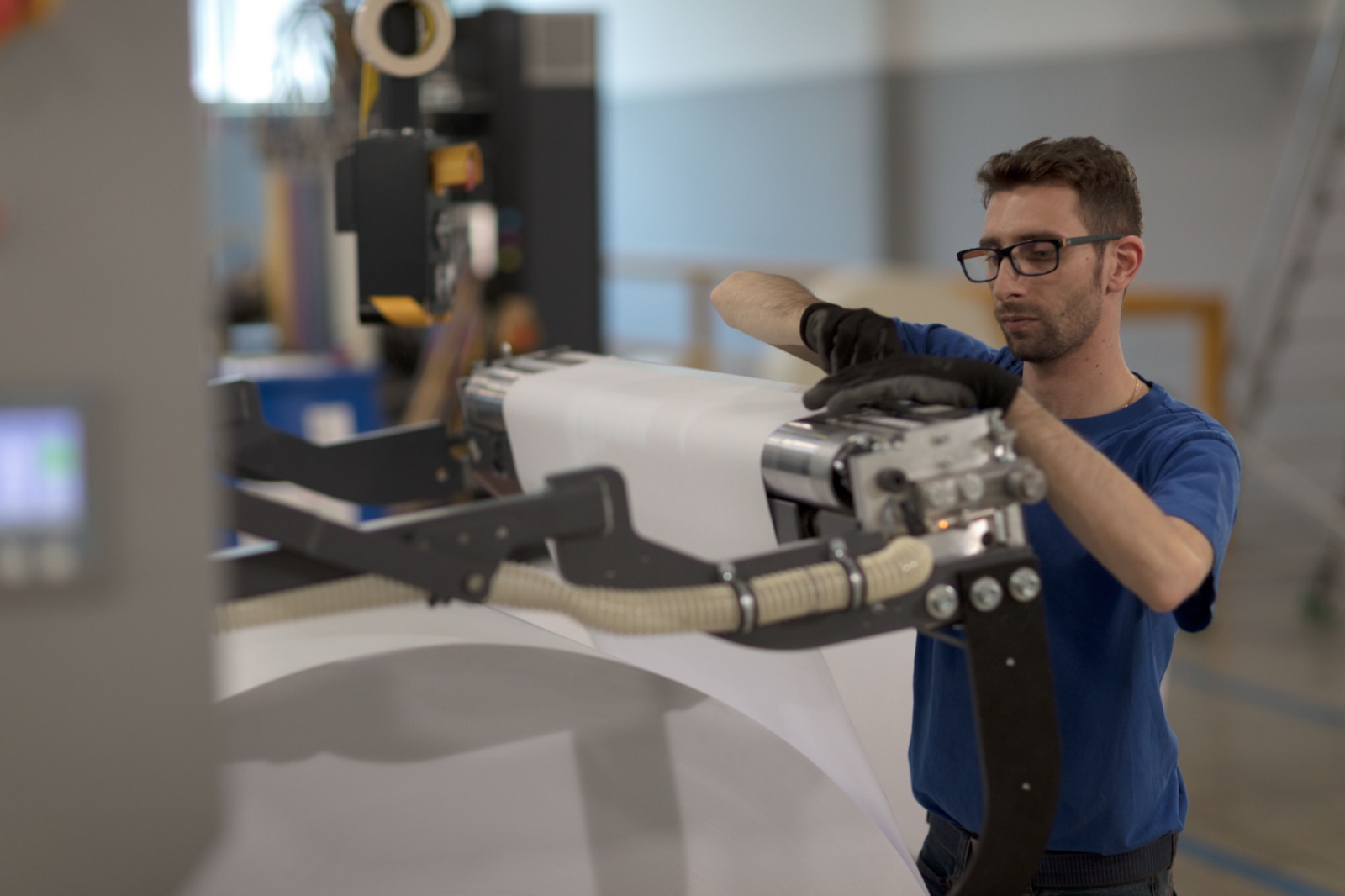
Shaftless Unwind
Air-operated sliding chucks grip the core directly from either end, eliminating the need for a through-shaft. Requires rigidity to prevent vibration from eccentric rolls.
Why use it
Operator safety and faster changeovers as roll weights increase — no shaft threading required.
Common uses
Heavy rolls where shaft handling creates physical strain and pinch-point risk.
Turret Unwind
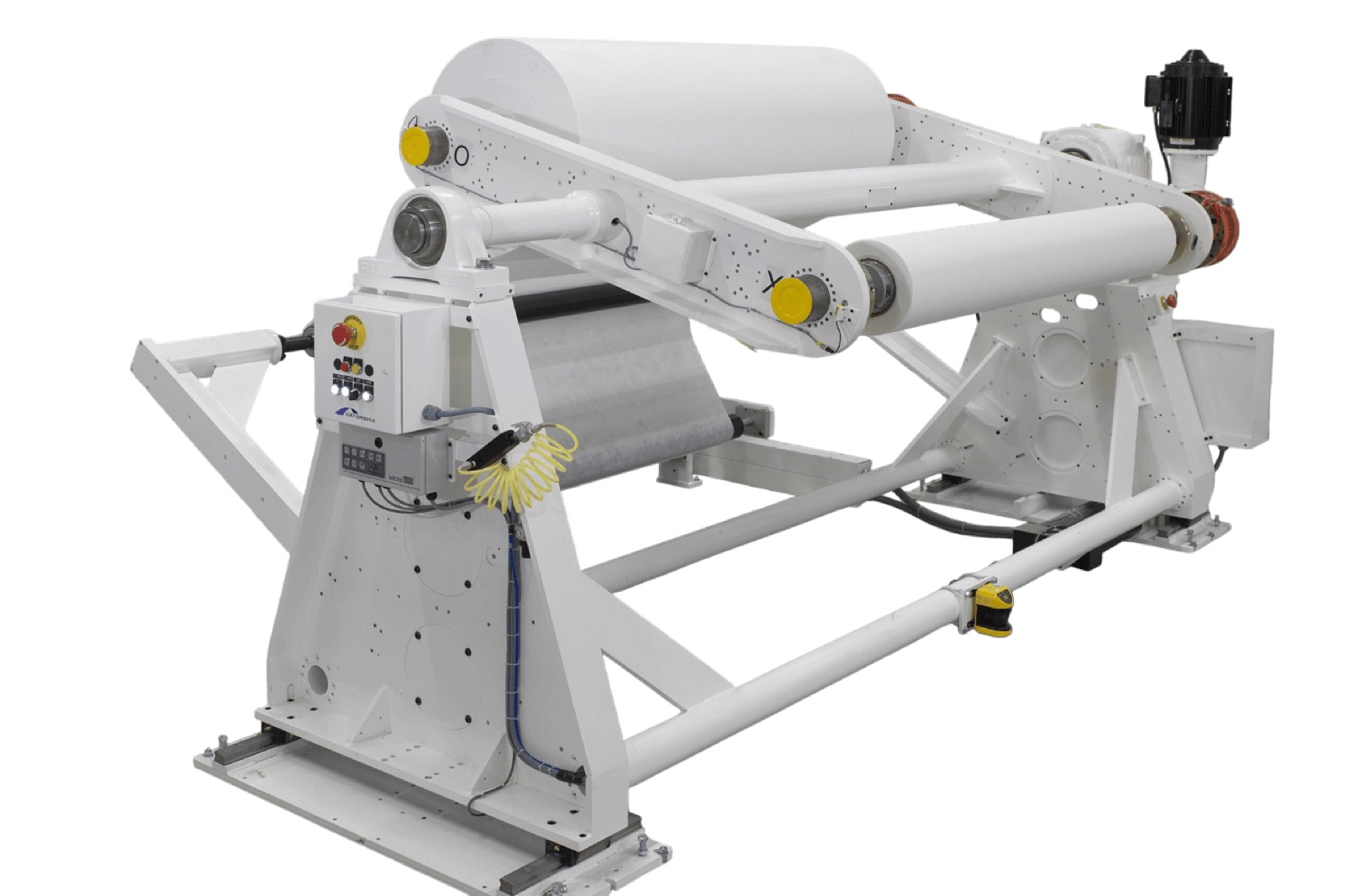
A rotating frame mounts two or more roll positions. While one roll runs, the next is staged, and the turret rotates to bring it into the running position. Almost always paired with automatic splicing.
Why use it
Continuous, high-speed production — eliminates downtime from manual roll changes.
Common uses
High-speed lines where even a short stop represents significant lost output.
Wind Types
Winder classes are defined by which of three control points — tension, nip, and torque (TNT) — are available to control wound roll hardness and internal structure.
Center Winding
Drive motor applies torque directly to the core — the precision choice, allowing direct MD tension and tapered tension control. Critical for sensitive materials and tight tolerances.
Surface (Contact) Winding
Roll is driven by friction with a drum nipped against its surface. Excellent for large, heavy rolls; less sensitive to changing inertia. Risk: roll weight can increase nip pressure as it grows.
Center-Surface (Gap) Winding
Hybrid: drives through core torque while using a driven nipping roller. Controls all three TNT knobs. Can switch between nipped mode (air exclusion) and gap mode (wrinkle resistance).
Turret (Duplex) Winding
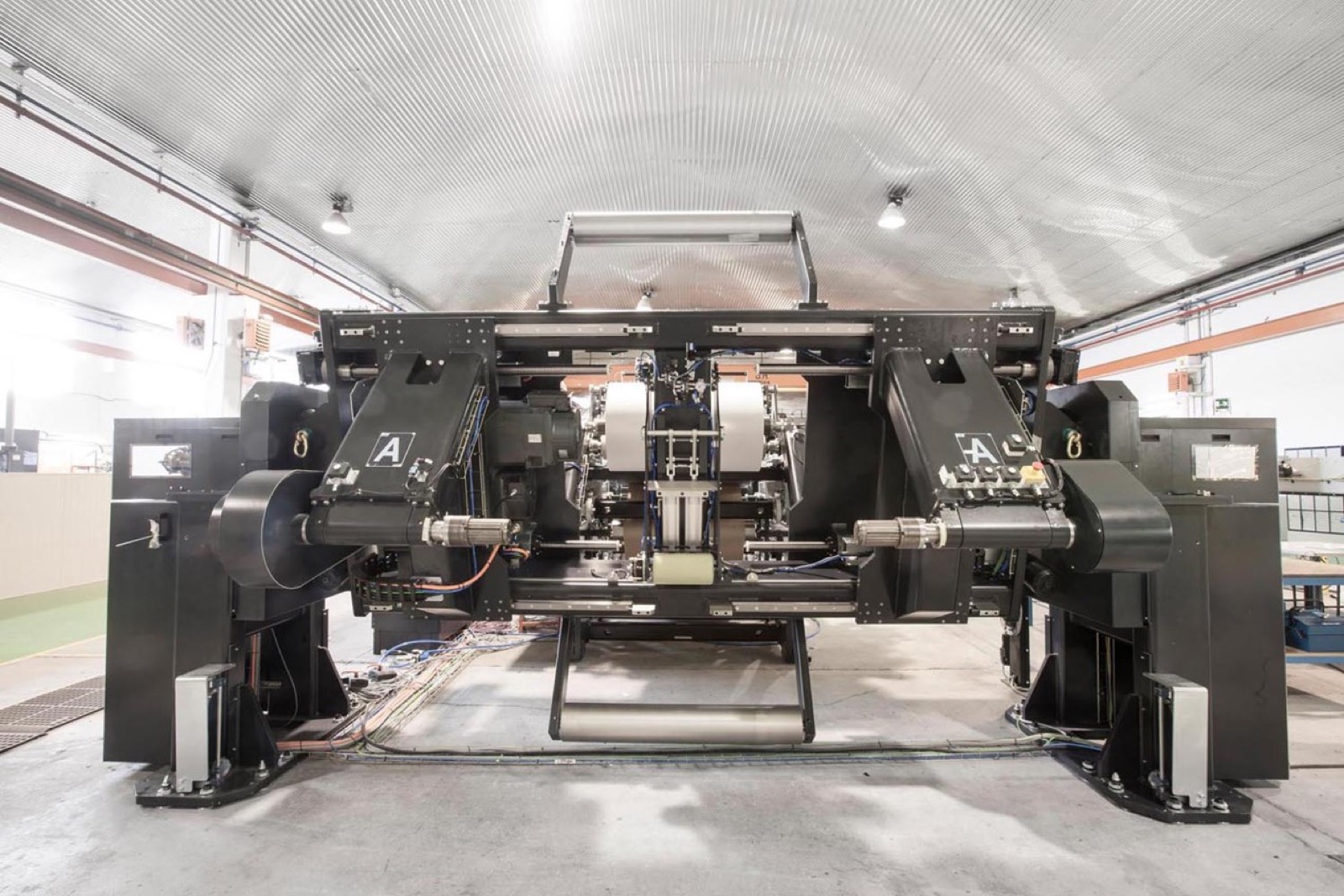
Holds two or more winding spindles on a rotating frame, allowing on-the-fly transfers — while one roll winds, a new core is staged and accelerated to match line speed, and the web is cut and transferred without stopping the line.
Choosing a Configuration
| Configuration | Best For | Key Advantage | Key Limitation |
|---|---|---|---|
| Shaft-mounted unwind | Standard rolls, manageable weight | Low cost | Manual roll change required |
| Shaftless unwind | Heavy rolls | Safety & speed | Rigidity requirement |
| Turret unwind | High-speed / high-volume | Continuous | Higher cost |
| Center winding | Sensitive / precision materials | Tension control | Complex control |
| Surface winding | Large, heavy rolls | Simple drive | Nip pressure risk |
| Center-surface (gap) | Wide range of materials | Full TNT control | Most complex |
| Turret winding | Continuous production | No downtime | Higher cost |
Winding and unwinding also involves considerations around specific formulations, safety systems, and defect troubleshooting — areas that benefit from SME review before this goes live.