
Slitting cuts a wide "master roll" into narrower rolls — the widths required for the next process step or the end customer. It's often one of the last operations in a converting line, and the precision achieved here has a direct downstream impact on waste, registration, and rewinding efficiency.
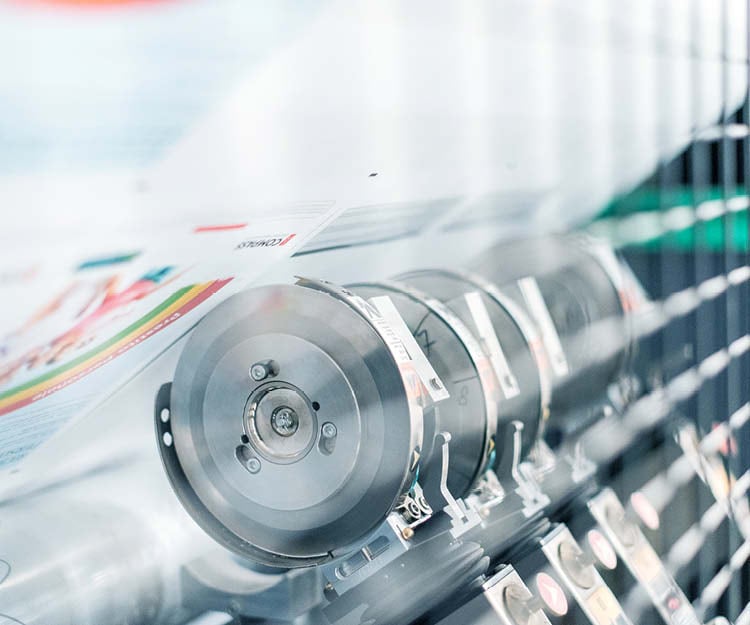
The Basics
- Slit width
- The final width of each output roll. Slit widths are typically specified by the customer or next process.
- Slitting accuracy
- How precisely the actual slit position matches the target — especially critical when slitting into narrow widths or when downstream equipment has tight web-width tolerance requirements.
- Edge quality
- The cleanliness and consistency of the slit edge. Poor edge quality (burrs, dust, ragged cuts) leads to problems in subsequent laminating, printing, or rewinding operations.
Common Slitting Methods
Shear Slitting
Two circular blades — one upper, one lower — are set to overlap slightly. The web passes between them and is sheared rather than cut. The cleanest cut available, with the lowest dust generation.
Why use it
Best edge quality and lowest dust generation of any slitting method — the cleanest cut.
Common uses
Most films, foils, and any application where dust generation or edge quality is critical.
Shear slitting blades (upper and lower) in slitting position
Razor Slitting
A razor or razor-like blade is held in a fixed position and the web is pulled through it. Simple and inexpensive — the blade itself is cheap and easy to replace — but edge quality is sensitive to blade sharpness and angle.
Why use it
Lowest cost and simplest setup; easy blade changes.
Common uses
Paper, board, and less-demanding film applications where edge quality is acceptable.
Razor blade slitting station — blade holder and web
Score (Crush) Slitting
A hardened upper circular blade presses the web against a hardened anvil roller, compressing it until it splits. The least precise of the three methods and produces the roughest edge — rarely used in flexible packaging.
Why use it
Simplicity and low cost; requires no opposing blade.
Common uses
Thicker materials like board where edge quality requirements are less stringent.
Score slitting setup — upper blade and anvil roller
Machine Configurations
- Duplex (center winder)
- The slitter-rewinder winds slit rolls onto two shafts simultaneously — odd-numbered rolls on one shaft, even on the other — preventing roll interference from adjacent lanes.
- Turret winder
- Multiple winding positions on a rotating frame allow finished rolls to be removed and new cores staged without stopping the machine — maximizing throughput.
- Log slitter
- Cuts a finished wound roll perpendicular to its axis — reducing a wide roll to shorter log lengths — rather than slitting along the web direction.
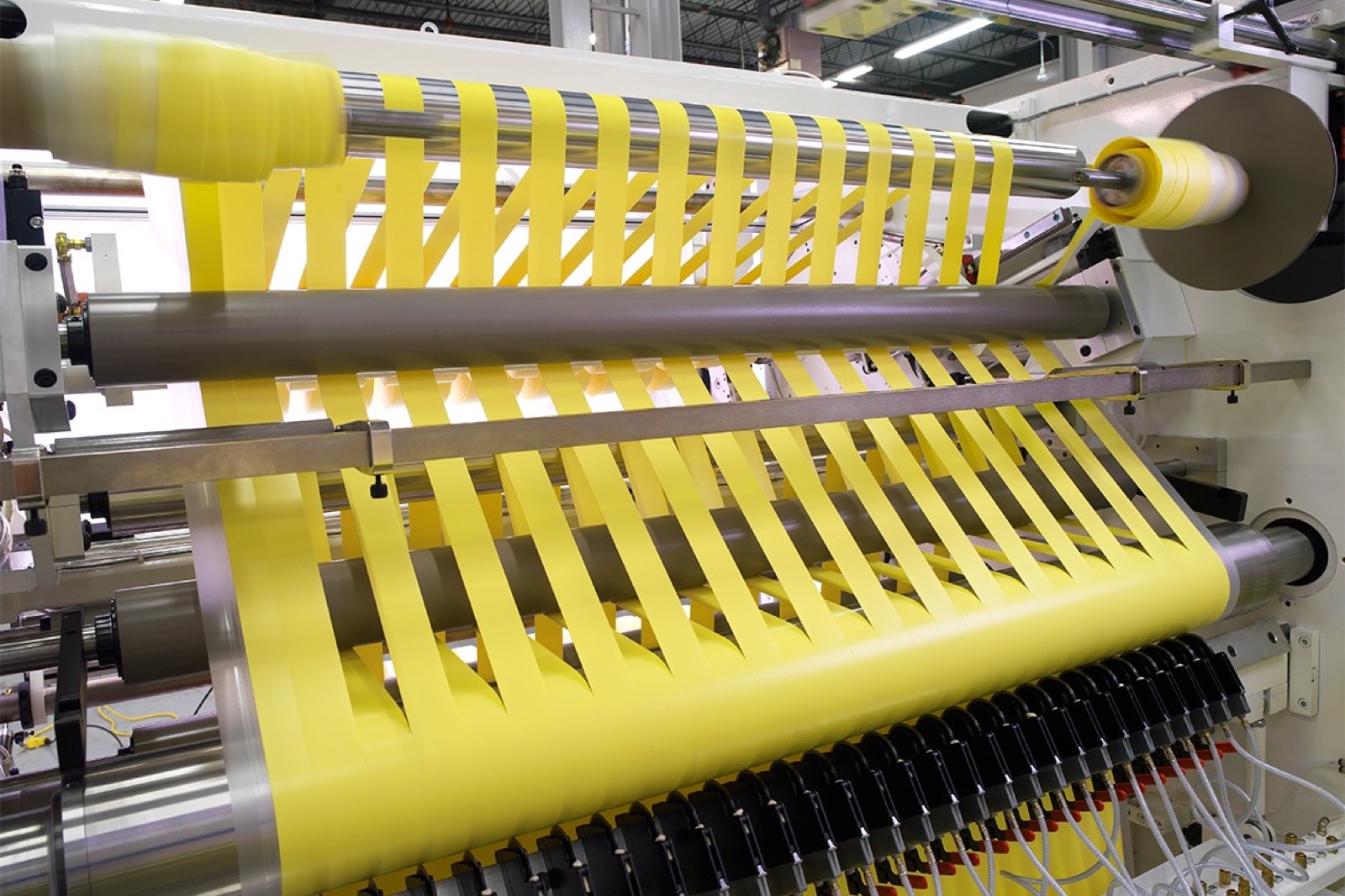
Slitting Method Comparison
| Method | Edge Quality | Dust Generation | Cost / Complexity | Best For |
|---|---|---|---|---|
| Shear | Excellent | Very low | Moderate | Films, foils, sensitive materials |
| Razor | Good | Moderate | Low | Paper, general film |
| Score | Fair | Higher | Low | Board, thicker materials |
Slitting method selection and troubleshooting involves additional considerations that benefit from SME review before this page goes live.