
Laminating bonds two or more layers of material together into a single, multi-layer structure, combining the properties of each layer — strength, barrier performance, printability — into a combination that no single material could deliver alone.
The Basics
- Primary & secondary web
- The two (or more) substrates being combined; some structures involve three or more layers bonded in sequence.
- Bond strength (peel strength)
- How well the laminated layers resist separating — the primary quality measure for most laminations.
- Adhesive coat weight
- The amount of adhesive applied per unit area. Too little risks a weak bond; too much adds cost and can cause defects.
- Cure time (aging)
- Some lamination methods — notably solventless — require a period of time for the adhesive to fully cross-link and reach full bond strength after lamination rather than curing instantly in-line.
Peel strength test being performed on a laminated sample
Common Lamination Methods
Wet Bond Adhesive Lamination
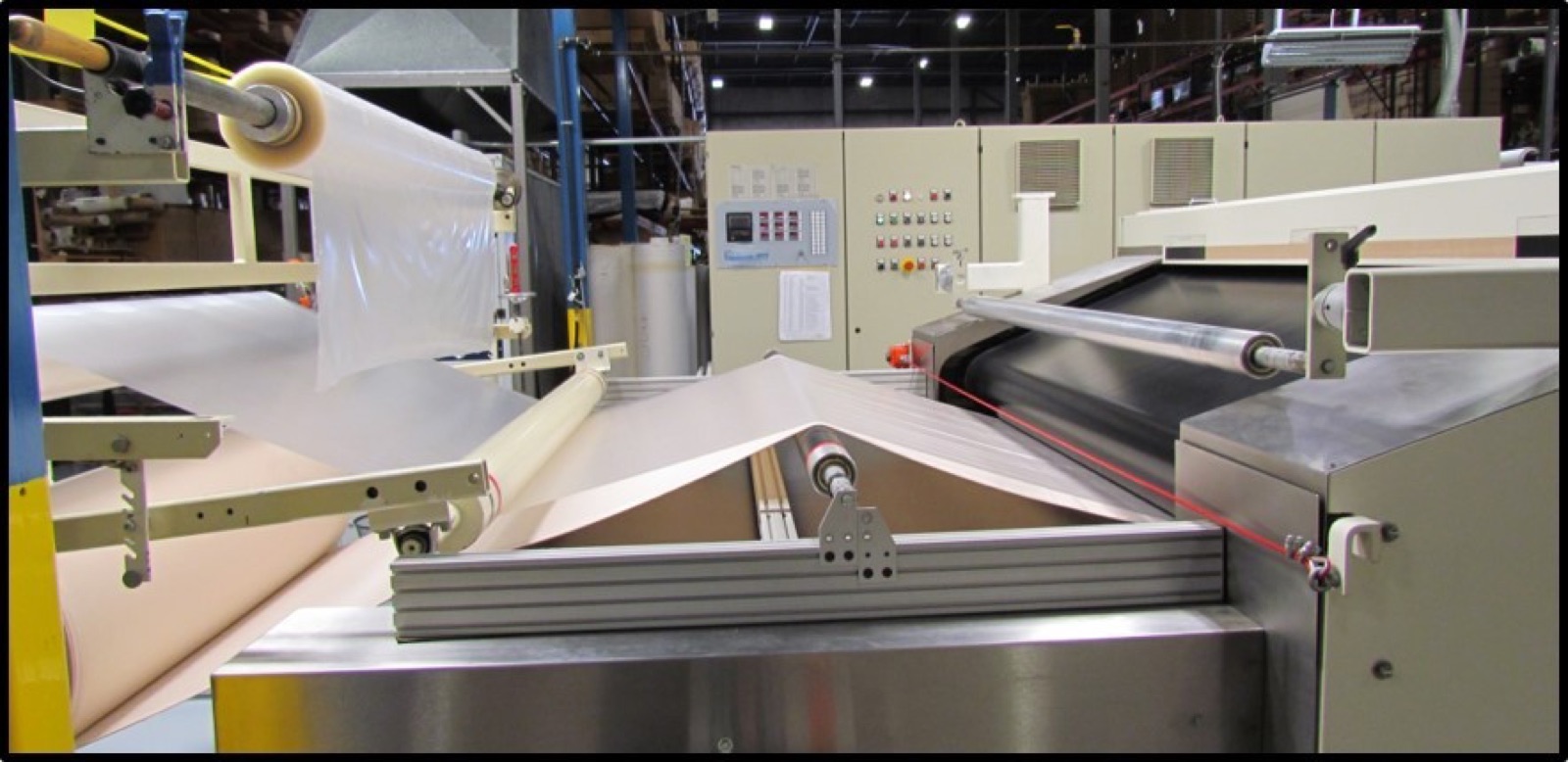
Adhesive is applied to one web and the two substrates are combined while the adhesive is still wet. The resulting sandwich passes through a dryer where the solvent or water evaporates out through the more porous substrate.
Why use it
Works well when at least one substrate is porous enough to let the solvent or moisture escape during drying.
Common uses
Paper-to-film laminations and other combinations involving at least one porous substrate.
Wet bond adhesive lamination station
Dry Bond Adhesive Lamination
Adhesive is applied to one web and dried in-line — removing the solvent — before the coated web is combined with the second substrate under heat and pressure, which reactivates the dried adhesive to form the bond.
Why use it
Works for combining two nonporous substrates such as film-to-film structures, where a wet bond process wouldn't allow the solvent to escape.
Common uses
Flexible packaging structures combining multiple film layers.
Dry bond adhesive lamination station
Solventless Lamination
A 100% solids adhesive with no carrier is applied at a very thin, precisely metered coat weight and then laminated to the second substrate. The adhesive cures over time after lamination (aging) rather than being dried in-line.
Why use it
No dryer required since there's no carrier to remove, making the process faster, more compact, and lower in emissions.
Common uses
Increasingly the standard method for flexible packaging.
Solventless laminator — precision metering rolls
Extrusion Lamination
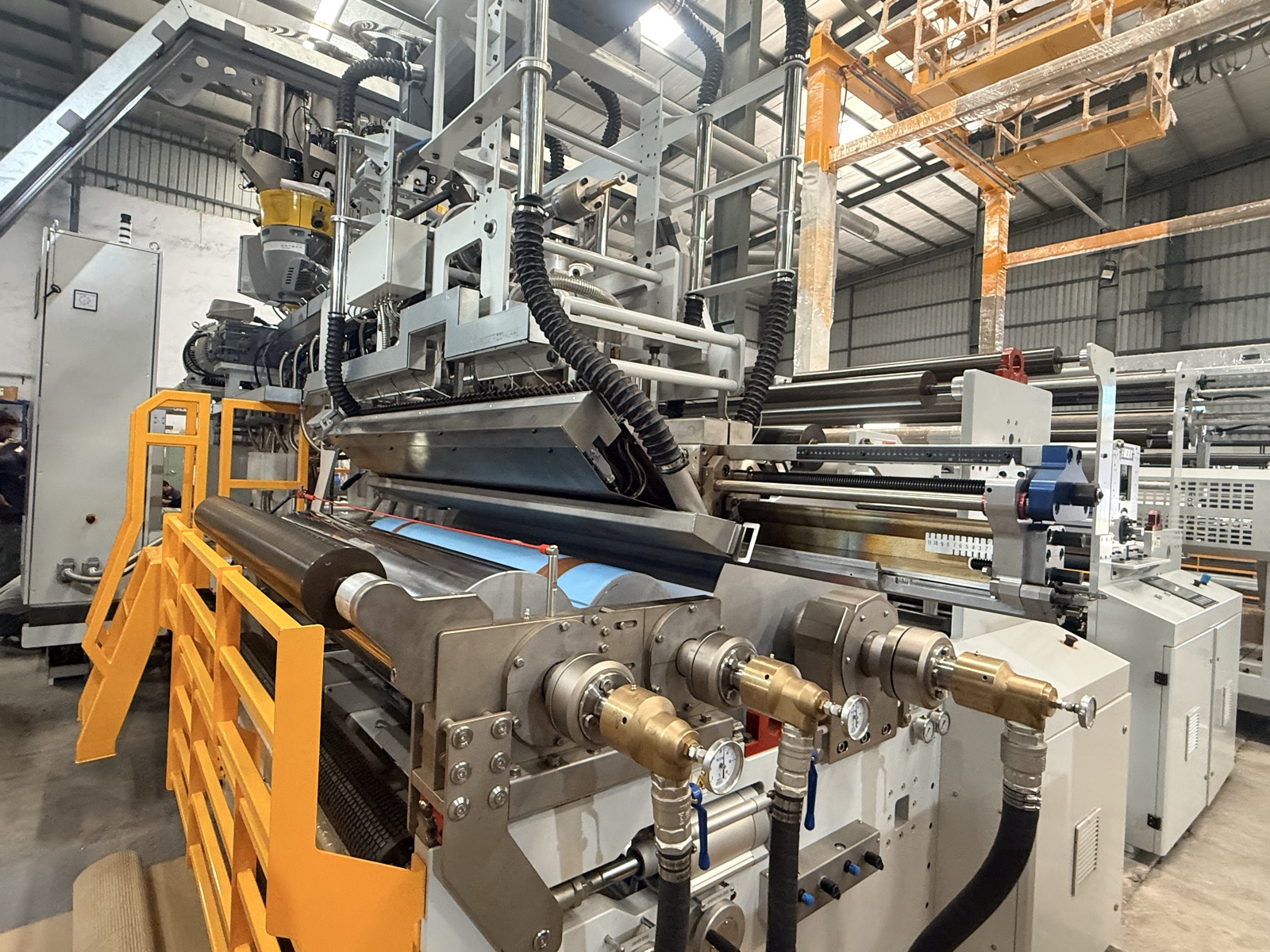
A molten polymer — most often polyethylene — is extruded as a thin film directly between two substrates and immediately nipped between a chill roll and a rubber roller, where it cools and solidifies, bonding the layers together.
Why use it
The extruded layer contributes functional properties — such as a moisture barrier — in addition to acting as the adhesive.
Common uses
Barrier packaging structures combining paper or film with an extruded polyethylene layer.
Thermal (Hot Melt) Lamination
A hot melt adhesive, applied in a molten state, bonds two substrates together under heat and pressure and solidifies quickly as it cools — without any solvent to evaporate.
Why use it
Fast bonding without a drying step, generally at lower equipment cost than solvent-based systems.
Common uses
General-purpose bonding, including many paper-based and lower-cost packaging structures.
Hot melt lamination station
Other Lamination Methods
Flame Lamination
A substrate's surface — typically foam — passes briefly over an open flame to melt it slightly, then bonds to a second substrate under pressure using the melted surface as adhesive. Common in automotive interiors.
Wax Lamination
A largely legacy method using wax as the bonding agent. Low-cost but generally weaker than modern adhesive systems; replaced in most applications.
Choosing a Lamination Method
| Method | Substrate Porosity | Dryer Required | VOC Emissions |
|---|---|---|---|
| Wet bond | ≥1 porous | Yes | Higher |
| Dry bond | Nonporous OK | Yes | Higher |
| Solventless | Any | No | Minimal |
| Extrusion | Any | No | Minimal |
| Thermal | Any | No | Minimal |
Cross-section of a finished multi-layer laminate showing the distinct bonded layers
Lamination method selection involves additional considerations around specific formulations, defect modes, and process variables — areas that benefit from SME review before this page goes live.