
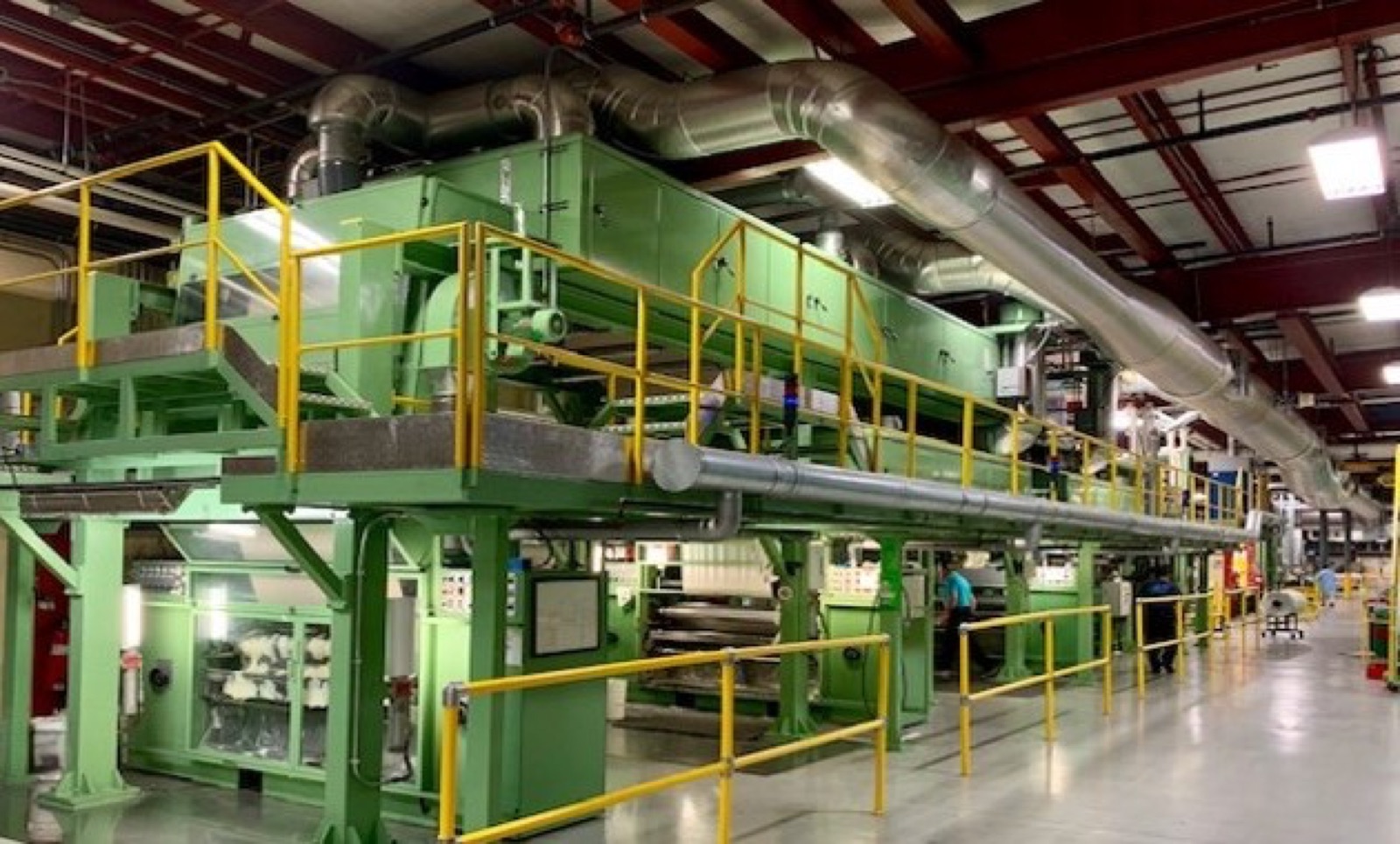
Finishing refers to value-adding operations that transform a web — or portions of it — into its near-final or final form. These operations happen after primary converting processes and prepare the material for packaging, end use, or onward processing by a customer.
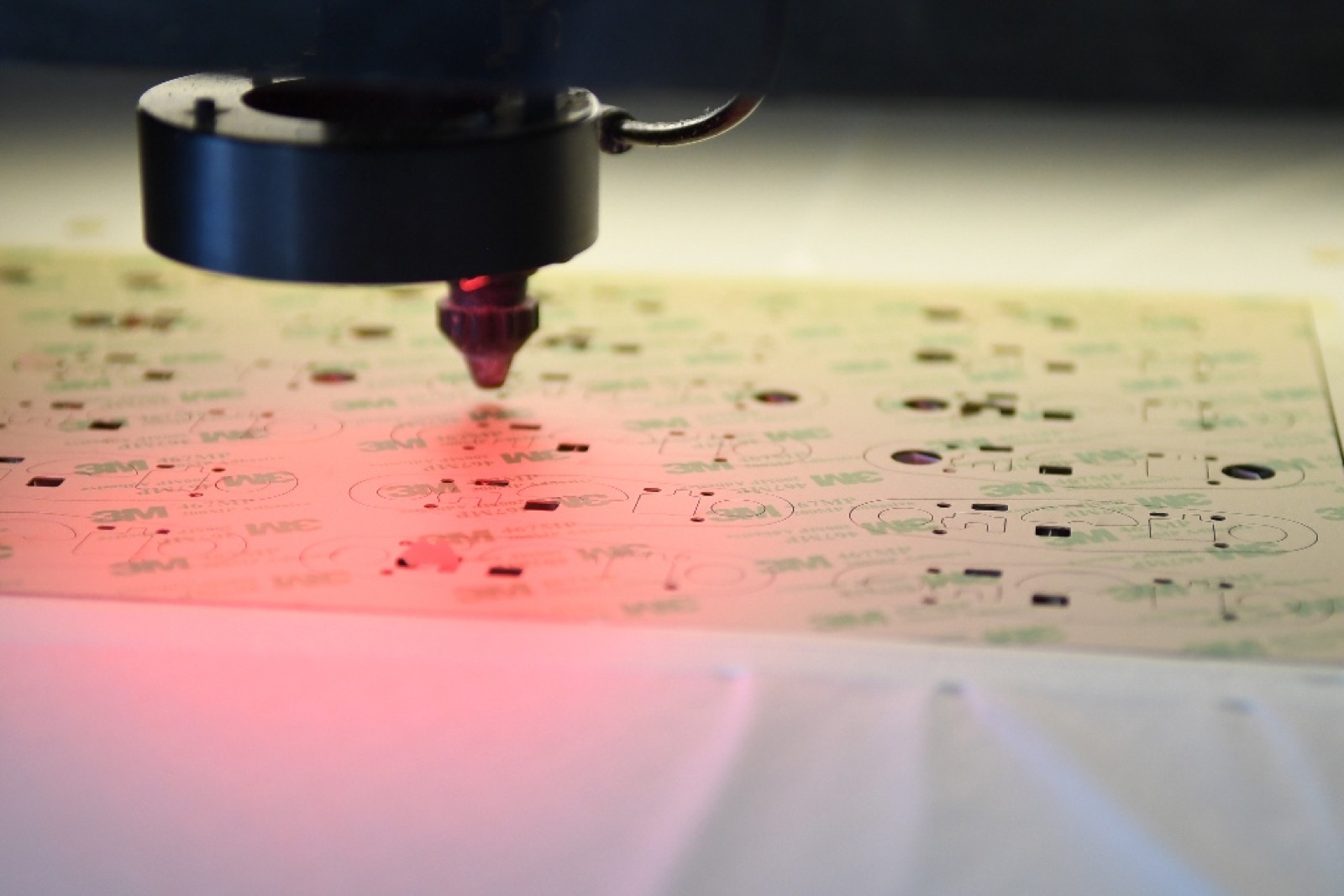
Die Cutting
Die cutting uses a shaped die — either flat or rotary — to cut a web into specific shapes, cut out windows, or kiss-cut (cut through just one layer of a laminate) to produce labels and other products that require a precise outline.
Through cutting
The die cuts completely through all layers of the web — producing cut shapes or blanks.
Kiss cutting
The die cuts through the face material and adhesive of a label stock, but not through the carrier or liner — leaving the label easy to remove by hand.
Rotary die cutting
A die mounted on a cylinder engages the web continuously — the highest-speed die cutting method, typically used on high-volume label and flexible packaging lines.
Embossing & Debossing
Embossing mechanically deforms the web using a male and female roll pair to create a three-dimensional relief pattern in the substrate's surface. Debossing creates an indent rather than a raised pattern. Both are applied in-line on a converting machine.
Why use it
Adds texture, aesthetics, or functional surface structure without a coating.
Common uses
Textured tissue, decorative packaging films, embossed aluminum foil, functional surface micro-structures.
Embossing roll pair in operation — male and female rolls
Perforating
A pattern of small holes is cut through the web — either as a functional feature (easy-open, breathability) or to create a tear path that allows a consumer to separate sections of a product cleanly.
Why use it
Simple, in-line, and adds consumer convenience or functional breathability.
Common uses
Easy-open packaging, toilet tissue, food packaging requiring controlled atmosphere.
Perforating blades or pin roll
Scoring
A blade or rule creates a crease line in a substrate — not cutting through but weakening it along a specific path so it folds cleanly without cracking or irregular tearing.
Why use it
Improves fold quality and prevents cracking of coated or laminated materials when folded.
Common uses
Folding cartons, book spines, and any R2R-produced product that is later folded.
Scoring blade or rule in operation
Sheeting
Sheeting converts a continuous web into discrete flat sheets of a specified length — the transition from roll-fed to sheet-fed form. Used when downstream operations require sheets rather than continuous web.
Why use it
Produces flat sheet output from a continuous web in a single pass.
Common uses
Converting paper, film, or foil rolls into sheet stock for subsequent printing, cutting, or forming.
Sheeting unit or cutter-creaser
Other Finishing Operations
In-Line Inspection
100% inspection systems — camera, spectrophotometer — detect defects in real time and may automatically flag, reject, or stop the line. See the Testing & Inspection page.
In-Line Rewinding & Splicing
Automated roll change and splicing systems can replace an expiring roll and join the new web without stopping the line — critical for continuous production.
Finishing operation selection and troubleshooting involves additional considerations that benefit from SME review before this page goes live.