
Metallizing applies an extremely thin metallic or metal oxide layer to a web's surface through vacuum deposition, adding barrier protection, reflectivity, or conductivity. The entire process takes place inside a sealed vacuum chamber — the metal vapor needs an unobstructed, contamination-free path from its source to the web.
Metallizer's vacuum chamber — exterior view
The Basics
- Vacuum chamber
- The sealed environment where deposition takes place. Removing air prevents vaporized metal from oxidizing or scattering before it reaches the web.
- Chill (cooling) drum
- A large, cooled, rotating drum the web passes over during deposition. Keeps the web from being damaged by heat from the vaporized metal source.
- Optical density (OD)
- A measure of how opaque the metallized layer is. Higher OD corresponds to a thicker, more opaque metal layer — a common way to specify and check metallizing quality.
Chill / cooling drum inside metallizer
Optical density measurement on metallized sample
Common Metallizing Methods
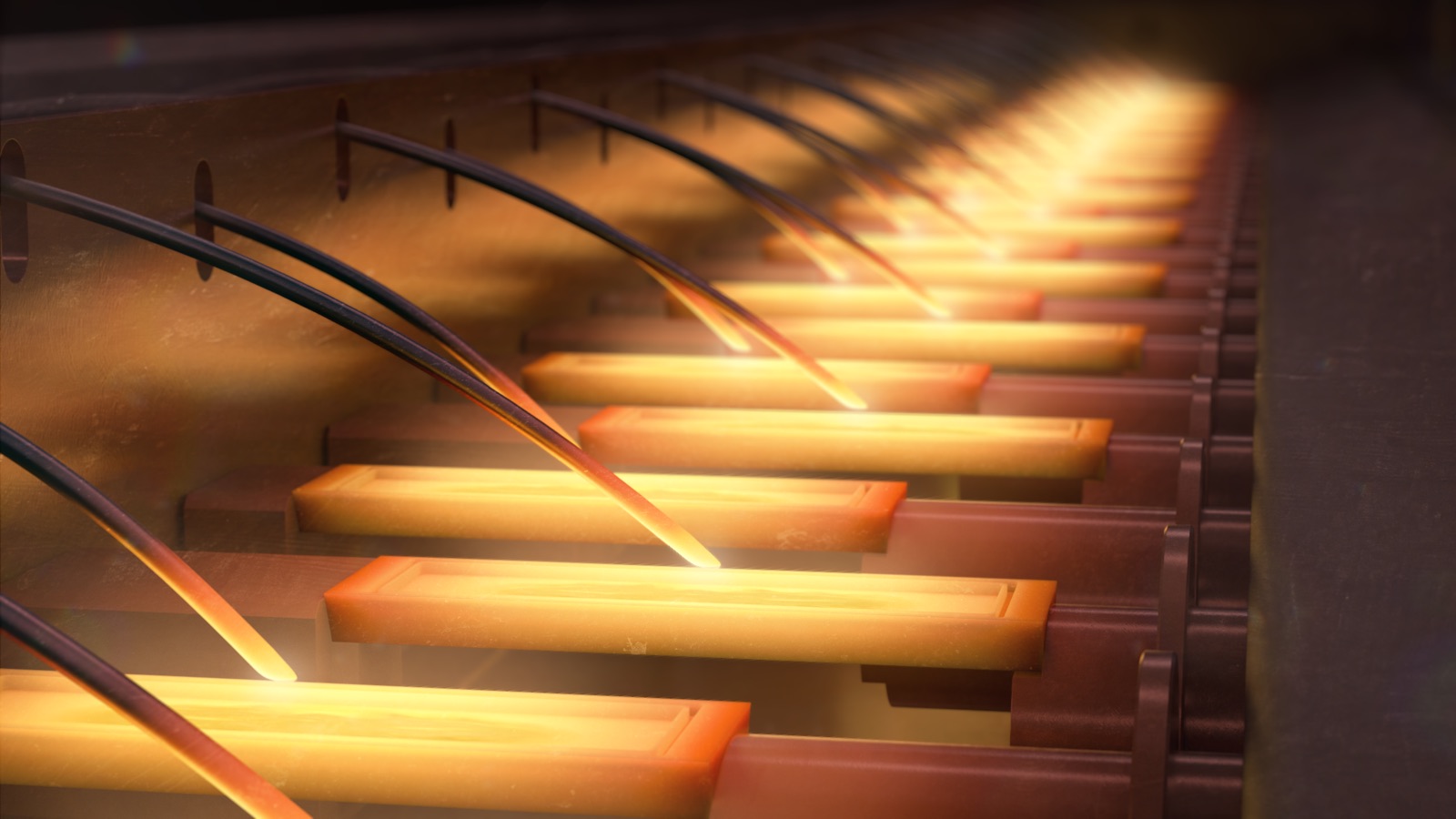
Thermal (Resistance) Evaporation
Aluminum wire is fed onto small heated ceramic boats (crucibles), where electrical resistance heating vaporizes the metal. The vapor travels upward and condenses onto the web passing over the chill drum above.
Why use it
The most common and cost-effective method for standard aluminum metallizing at production scale.
Common uses
Food packaging films, balloons, insulation products, and decorative films.
Electron Beam (E-Beam) Evaporation
A high-energy electron beam is directed at a source material held in a crucible, vaporizing it directly. Delivers concentrated, controllable energy — enabling materials with much higher melting points than aluminum.
Why use it
Enables deposition of a wider range of materials with more precise control than thermal evaporation.
Common uses
Optical coatings, specialty metals, and higher-precision deposition applications.
E-beam evaporation source
Sputtering (Magnetron Sputtering)
Rather than melting a source, sputtering bombards a target material with ions, physically ejecting atoms that deposit onto the substrate. Runs at lower substrate heat than evaporation-based methods.
Why use it
Better film uniformity and adhesion; can deposit alloys and compounds with more precision than evaporation.
Common uses
High-precision electronics, functional and conductive coatings, specialty optical films.
Sputtering target or chamber interior
Other Deposition Methods
Chemical Vapor Deposition (CVD)
Reacts gaseous precursor chemicals at the substrate surface to build up a thin film. Often used to deposit transparent oxide barrier coatings.
Oxide Coating (Transparent)
Thin transparent oxide layers (SiOx, AlOx) provide strong barrier properties while allowing the packaged product to remain visible. Common in microwaveable food packaging.
Demetallization
Selective removal of the metallized layer in a specific pattern through etching or laser ablation — used to create windows for RFID transparency, microwave use, or decorative patterns.
Choosing a Metallizing Method
| Method | Material Range | Uniformity | Substrate Heat | Cost |
|---|---|---|---|---|
| Thermal evaporation | Aluminum primary | Good | Higher | Low |
| E-beam evaporation | Broad | High | Moderate | Moderate |
| Sputtering | Broadest | Highest | Low | Higher |
Finished metallized film being rewound exiting the vacuum chamber
Metallizing involves additional considerations around specific formulations, defect modes, and safety systems — areas that benefit from SME review before this page goes live.